
Proper operation and maintenance of an industrial RO system is critical to ensure stable long-term performance and maximize membrane lifespan. Understanding maintenance procedures, cleaning schedules, and monitoring techniques is essential for engineers, project managers, and industrial operators.
Regular maintenance not only protects RO membranes but also reduces operational costs and prevents unplanned downtime.
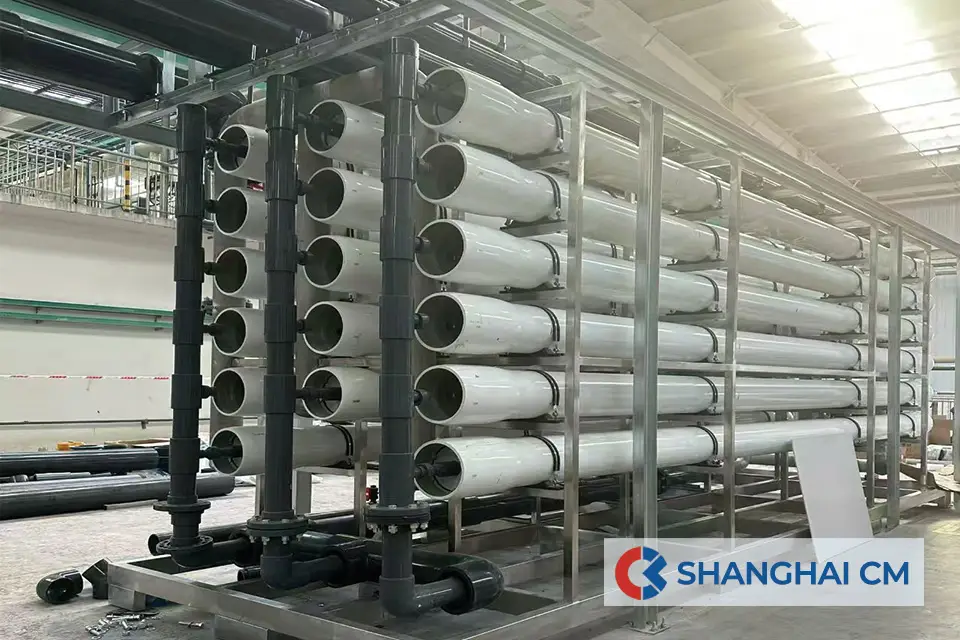
1. Daily Operation Monitoring
Key Parameters to Monitor
Industrial RO system operation should be monitored daily using online instruments:
- Feed water pressure and flow
- Permeate flow and conductivity
- Concentrate flow and pressure drop
- Recovery rate
Monitoring these parameters allows early detection of:
- Membrane fouling
- Scaling
- Pump malfunctions
- Flow imbalance
Real-time monitoring is essential for maintaining stable RO system operation.
2. Chemical Cleaning and CIP (Clean-In-Place)
When to Clean
RO membranes require periodic cleaning based on feed water quality and operating conditions:
- High SDI or organic content → more frequent cleaning
- Hard water or scaling tendency → antiscalant dosing + scheduled CIP
CIP Procedure
- Isolate the membrane system
- Circulate cleaning chemicals (acid, alkali, or detergents)
- Flush with clean water to remove residual chemicals
- Restart the system and check performance
A properly designed CIP system minimizes downtime and maintains membrane efficiency.
3. Membrane Lifespan Factors
The service life of RO membranes is influenced by:
-
Feed Water Quality
- High TDS, SDI, or organics can accelerate fouling.
- Pretreatment is critical to protect membranes.
-
Operating Conditions
- Excessive recovery rate or high pressure can damage membranes.
- Operating outside design parameters reduces lifespan.
-
Chemical Exposure
- Chlorine, improper pH, or over-dosing cleaning chemicals may deteriorate membranes.
Typical Lifespan:
-
3–5 years for industrial RO membranes with proper operation and maintenance.
-
4. Preventive Maintenance Practices
- Regular filter replacement (sand, carbon, UF)
- Check chemical dosing systems
- Monitor pump performance and motor condition
- Record operational parameters daily
- Schedule membrane inspection and cleaning
Preventive maintenance extends membrane lifespan and ensures consistent product water quality.
5. Troubleshooting Common Issues
| Issue | Possible Cause | Recommended Action |
|---|---|---|
| High permeate conductivity | Membrane fouling, leak, or damage | Check pretreatment, flush membrane, replace if necessary |
| Pressure drop across membrane | Scaling or fouling | CIP, antiscalant adjustment |
| Low recovery rate | Feed water quality variation | Adjust recovery, verify feed pump performance |
| Frequent cleaning required | Poor pretreatment | Improve pretreatment or use higher-quality membranes |
6. Recommended Operational Tips
- Always operate within design parameters for pressure, flow, and recovery rate
- Use real-time monitoring instruments for early detection
- Follow CIP schedule strictly based on feed water quality
- Keep operational logs to analyze trends and prevent membrane damage
Consistent operation monitoring and preventive maintenance are key to achieving long-term system stability.
Conclusion
Proper operation and maintenance of industrial RO systems ensures:
- Stable long-term performance
- Maximum membrane lifespan
- Reduced operating cost
- Consistent product water quality
Partnering with a professional RO system manufacturer ensures that operation protocols, maintenance schedules, and membrane selection are optimized for your industrial application.