
Why RO System Design Parameters Matter
In industrial water treatment, the performance of an RO system is determined not by the membrane alone, but by the design parameters applied during system engineering.
Incorrect design parameters often result in:
- Unstable operation
- High energy consumption
- Frequent membrane fouling
- Short membrane service life
Understanding the key design parameters of industrial RO systems is essential for achieving reliable, long-term performance.
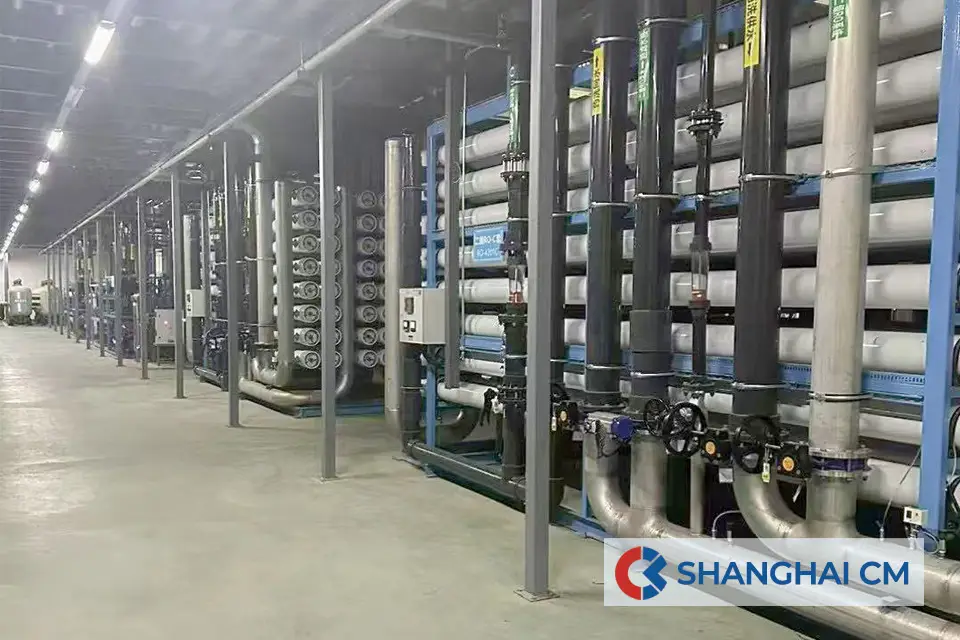
Feed Water Quality as the Primary Design Basis
All RO system design parameters start with feed water quality.
Critical feed water parameters include:
- TDS and ionic composition
- SDI and turbidity
- Temperature
- Iron, oil, and organic content
- Biological activity
Without accurate feed water data, RO system design becomes theoretical rather than practical.
Feed water quality directly affects membrane selection, operating pressure, recovery rate, and pretreatment requirements.
System Capacity and Flow Rate Design
System capacity defines how much permeate an industrial RO system can produce.
Key considerations:
- Required permeate flow rate (m³/h or m³/day)
- Continuous vs batch operation
- Peak demand and safety margin
Oversizing increases capital cost, while undersizing leads to operational stress and production limitations.
Operating Pressure and Energy Consumption
Operating pressure is one of the most critical RO system design parameters.
Factors affecting pressure selection:
- Feed water TDS
- Membrane type and flux
- Operating temperature
Higher pressure increases permeate flux but also raises energy consumption and membrane fouling risk.
Optimized pressure design balances performance, energy efficiency, and membrane protection.
Recovery Rate and Concentration Factor
Recovery rate determines how much feed water is converted into permeate.
Typical industrial RO recovery rates:
- Brackish water RO: 60–75%
- Wastewater RO: 60–70%
Excessive recovery increases:
- Scaling potential
- Fouling rate
- CIP frequency
Recovery rate should always be designed based on scaling analysis and long-term stability, not maximum theoretical limits.
Flux Rate and Membrane Loading
Flux rate defines the permeate flow per membrane area.
Key design principles:
- Conservative flux improves membrane life
- Higher flux increases fouling risk
- Flux must be adjusted for temperature
In wastewater reuse and high-fouling applications, lower design flux significantly improves system reliability.
Membrane Selection and Array Configuration
Membrane selection depends on:
- Salt rejection requirements
- Operating pressure
- Fouling resistance
Array configuration (such as 2:1 or 3:2 staging) affects:
- Pressure distribution
- Recovery balance
- Concentration polarization
Proper membrane array design ensures uniform membrane loading and stable system operation.
Pretreatment Design Parameters
Pretreatment is a critical part of RO system design.
Typical pretreatment parameters include:
- SDI control targets
- Turbidity limits
- Oil and iron removal efficiency
For complex feed water:
- UF pretreatment is recommended for surface water
- MBR pretreatment is ideal for wastewater reuse projects
Pretreatment quality directly determines RO membrane performance and cleaning frequency.
CIP System and Cleaning Strategy Design
CIP system design is often overlooked but critically important.
Key CIP design parameters:
- Cleaning flow rate and pressure
- Chemical cleaning sequence
- Cleaning tank volume
A properly designed CIP system allows effective membrane recovery without mechanical damage.
Instrumentation and Monitoring Parameters
Online monitoring improves RO system stability.
Key monitored parameters include:
- Differential pressure
- Permeate conductivity
- Flow rate and recovery
- Temperature and pressure
Early detection of performance deviation reduces operational risk and maintenance cost.
Design Margin and Safety Factors
Industrial RO systems should always include reasonable design margins.
Design margins account for:
- Feed water quality fluctuation
- Membrane aging
- Seasonal temperature changes
Conservative design margins significantly improve long-term system reliability.
Common Design Mistakes in Industrial RO Systems
Typical design mistakes include:
- Overestimating recovery rate
- Ignoring temperature correction
- Insufficient pretreatment design
- Excessive flux loading
Avoiding these mistakes is essential for achieving stable operation.
How This Article Fits into the RO System Knowledge Framework
This article focuses on RO system design parameters.
For related topics:
-
RO system selection → How to Choose the Right Industrial RO System
-
Wastewater reuse → RO System for Wastewater Reuse: MBR + RO Configuration Guide
-
Full overview → Industrial RO System – Types, Design, Applications & Selection Guide
-
Frequently Asked Questions About RO System Design
What is the most important RO system design parameter?Feed water quality is the most critical parameter, as it affects all other design decisions.
How does recovery rate affect RO system performance?Higher recovery increases fouling and scaling risk, while lower recovery improves stability.
Is higher flux always better?No. Excessive flux increases fouling and reduces membrane lifespan.
Why is pretreatment so important in RO design?Pretreatment protects RO membranes and ensures stable long-term operation.
Conclusion
The performance of an industrial RO system depends on proper control of multiple design parameters. Feed water quality, recovery rate, flux, pressure, pretreatment, and monitoring must be balanced to achieve reliable and cost-effective operation.
Professional RO system design focuses on stability, efficiency, and lifecycle cost, not just initial performance metrics.
For industrial RO system projects, providing detailed feed water analysis and operating requirements allows key design parameters to be properly evaluated. Early engineering assessment reduces operational risk and long-term cost.