
In industrial water treatment projects, RO systems rarely fail on the first day.
Most problems appear 6 to 12 months after commissioning—when membrane fouling becomes frequent, recovery rates start to drop, operating pressure increases, and CIP cleaning turns into a routine rather than an exception.
For water treatment engineering companies and EPC contractors, these issues are not caused by poor membrane quality alone. In most cases, they result from improper system design, insufficient pretreatment, and a lack of consideration for long-term operating stability.
This article is written for technical managers and engineers responsible for RO system selection and design. Instead of repeating basic theory, it focuses on why industrial RO systems fail in real projects—and how to design systems that operate reliably over the long term.
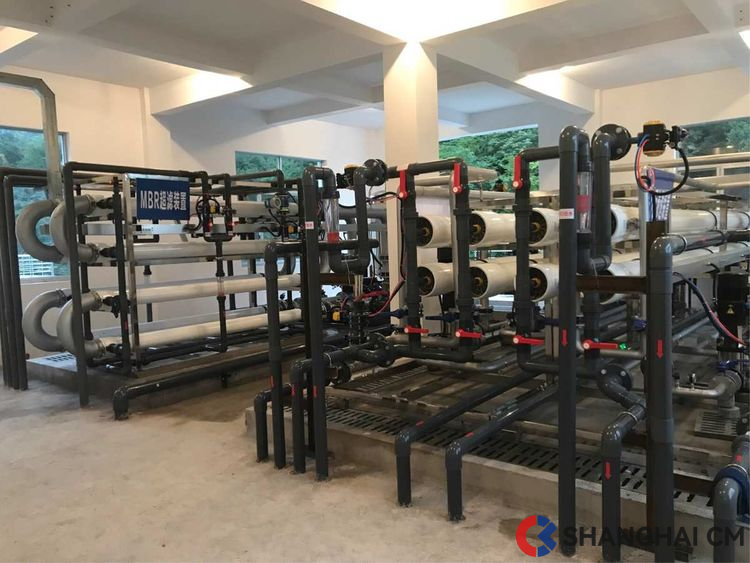
1. The Real Reasons Industrial RO Systems Fail in Practice
In engineering projects, RO system failure is rarely caused by a single factor. It is usually the result of multiple design compromises made during the early stages of the project.
Common failure reasons include:
- Overestimating system recovery rate to reduce initial investment
- Inadequate pretreatment for fluctuating feed water quality
- Selecting membranes without considering fouling tendency
- Designing systems based on ideal laboratory data rather than real operating conditions
- Lack of margin for long-term membrane performance degradation
These issues may not be obvious during commissioning but gradually lead to unstable operation over time.
2. An RO System Is a System — Not Just Membranes and Pumps
One of the most common misconceptions in industrial projects is treating the RO system as a collection of components rather than an integrated system.
A stable industrial RO system consists of:
- Properly designed pretreatment (media filtration, softening, UF or MBR)
- High-pressure pumps matched to actual operating conditions
- RO membranes selected based on fouling risk, not just salt rejection
- Reasonable recovery rate design
- CIP systems sized for real cleaning requirements
- Automation and monitoring for long-term operation
Ignoring any one of these elements will compromise overall system reliability.
3. Feed Water Quality Determines 80% of RO System Design
Experienced engineers understand that feed water quality analysis is the foundation of RO system design.
Key parameters that must be evaluated include:
- TDS and ionic composition
- SDI and turbidity
- Oil, organic matter, iron, and silica content
- Seasonal and operational water quality fluctuations
Designing an RO system based on average values instead of worst-case conditions is one of the most common reasons for early membrane fouling and frequent CIP cleaning.
4. Recovery Rate: Higher Is Not Always Better
From a cost perspective, higher recovery rates appear attractive. However, in real industrial projects, excessive recovery rates often lead to:
- Increased scaling risk
- Higher operating pressure
- Shortened membrane lifespan
- More frequent chemical cleaning
For industrial RO systems, a conservative recovery rate combined with stable long-term performance usually results in lower total cost of ownership (TCO).
5. Pretreatment Is the Most Underrated Part of RO System Design
Many RO system problems originate upstream of the membranes.
Depending on feed water characteristics, effective pretreatment may include:
- Multimedia filtration
- Activated carbon filtration
- Softening systems
- Ultrafiltration (UF)
- Membrane bioreactor (MBR) for wastewater reuse
In wastewater reuse projects, MBR + RO configurations are widely adopted because they significantly reduce fouling risk and stabilize RO operation.
6. Designing RO Systems for Long-Term Operation, Not Commissioning Day
A well-designed industrial RO system should operate reliably not only on the first day, but throughout years of continuous operation.
Key long-term design considerations include:
- Allowing margin for membrane performance decline
- Designing CIP systems for effective and complete cleaning
- Selecting industrial-grade materials and instrumentation
- Ensuring accessibility for maintenance and operation
- Automation strategies that support stable long-term performance
Engineering decisions made during the design phase directly determine whether a system becomes a long-term asset or a long-term problem.
7. Applications Where Stable RO System Design Is Critical
Industrial RO systems are widely used in applications such as:
- Boiler feed water for power plants
- Process water in manufacturing industries
- Wastewater reuse and zero liquid discharge (ZLD)
- Seawater and brackish water desalination
In these applications, system downtime and unstable operation directly affect production continuity and operating costs, making reliability more important than initial price.
8. How Engineering Companies Can Reduce RO System Risk
For water treatment engineering companies and EPC contractors, reducing RO system risk requires:
- Early-stage collaboration with experienced system manufacturers
- Conservative and realistic design assumptions
- Focus on long-term operation rather than lowest bid price
- Preference for suppliers with proven project experience
Choosing the right system partner is often as important as selecting the right equipment.
9. Final Thoughts: Reliable RO Systems Are Designed, Not Bought
Industrial RO systems do not fail because of bad luck.
They fail because of design decisions made before the system is built.
By focusing on feed water analysis, pretreatment design, reasonable recovery rates, and long-term operational stability, engineering teams can significantly reduce system risk and improve project outcomes.
A reliable RO system is not the cheapest system on paper—it is the system that runs stably year after year.
Frequently Asked Questions (FAQ)
1. Why do many industrial RO systems perform well during commissioning but fail after several months?
Most systems are designed based on average feed water conditions rather than worst-case scenarios. As water quality fluctuates, insufficient pretreatment, aggressive recovery rates, and limited design margins lead to fouling, pressure increase, and frequent CIP cleaning over time.
2. Is membrane quality the main factor determining RO system reliability?
No. While membrane quality is important, system design—including pretreatment, recovery rate, hydraulic balance, and operational control—has a much greater impact on long-term reliability than membrane brand alone.
3. How should recovery rate be selected for industrial RO systems?
Recovery rate should be determined based on feed water composition, scaling potential, and fouling risk rather than theoretical maximum values. Conservative recovery rates often result in lower total cost of ownership by extending membrane life.
4. When is UF or MBR pretreatment required before an RO system?
Advanced pretreatment such as UF or MBR is recommended when feed water contains high turbidity, organic matter, oil, or biological contamination. In wastewater reuse projects, MBR + RO is widely adopted for stable long-term operation.
5. How often should CIP cleaning be required in a well-designed RO system?
In a properly designed system, CIP should be an occasional maintenance activity. Frequent cleaning usually indicates upstream pretreatment deficiencies or overly aggressive system design.
6. What should engineering companies prioritize when selecting an RO system supplier?
Engineering companies should prioritize suppliers with proven system design experience, application-specific references, and a strong understanding of long-term operation rather than focusing solely on initial equipment price.