
What Is a Brackish Water RO System?
A brackish water RO system (BWRO system) is a type of industrial reverse osmosis system designed to treat water with moderate salinity, typically sourced from groundwater, wells, or surface water.
Compared with seawater RO systems, brackish water RO systems operate at lower pressure, require less energy, and are widely used in industrial and municipal water treatment projects where stable freshwater supply is limited.
A brackish water RO system is not a standalone unit, but a complete engineered water treatment system optimized for continuous industrial operation.
In industrial applications, brackish water RO systems are the most commonly used RO configuration due to their balance of performance, energy efficiency, and operating stability.
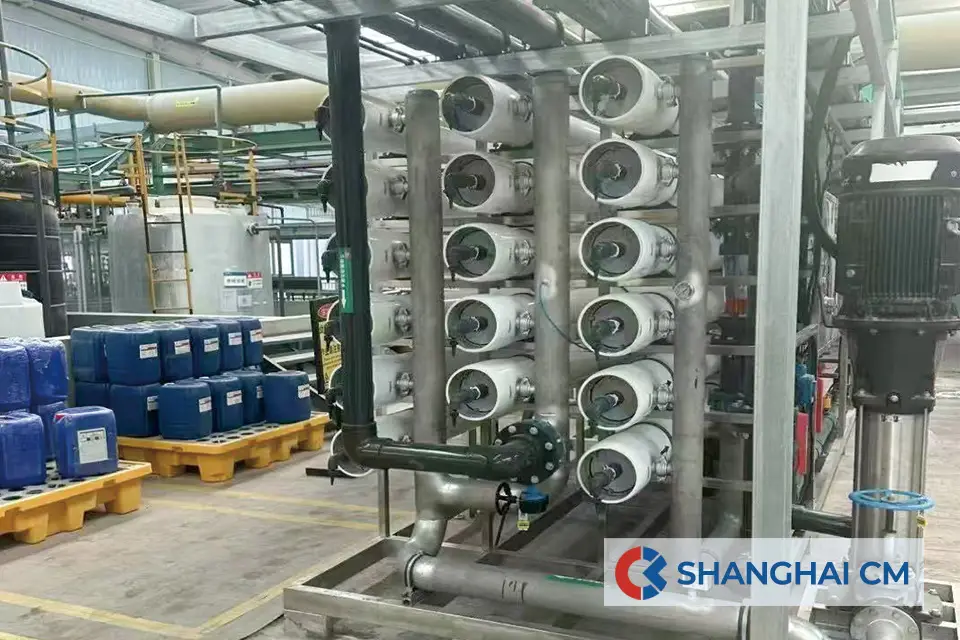
Typical Feed Water Characteristics of Brackish Water RO Systems
Understanding feed water quality is the foundation of proper BWRO system design.
Typical characteristics include:
- TDS range: 1,000–10,000 mg/L
- Water sources: groundwater, well water, river water
-
Common contaminants:
- Calcium and magnesium (scaling risk)
- Iron and manganese
- Silica
- Organic matter
Accurate feed water analysis is essential for selecting membrane type, pretreatment configuration, and system recovery rate.
Main Components of a Brackish Water RO System
A standard brackish water RO water treatment system typically consists of the following components:
- Pretreatment system(multimedia filter, activated carbon filter, softener, or UF system)
- High-pressure pump(lower pressure requirement compared to SWRO)
- RO membrane elements(brackish water RO membranes with high salt rejection)
- Pressure vessels
- Chemical dosing system(antiscalant, dechlorination, pH adjustment)
- CIP cleaning system
- PLC control system with online monitoring
In BWRO systems, pretreatment quality directly determines membrane lifespan and system stability.
Brackish Water RO System Design Considerations
Professional brackish water RO system design focuses on long-term stability rather than maximum short-term recovery.
Operating Pressure
-
Typical operating pressure: 1.0–2.5 MPa
-
Significantly lower than seawater RO systems
-
Results in lower energy consumption
-
Recovery Rate
- Typical recovery rate: 60–75%
- Higher recovery increases scaling risk
- Recovery must be optimized based on water chemistry
Over-designed recovery rates are one of the most common causes of BWRO membrane fouling.
Pretreatment Selection
Pretreatment is critical for protecting RO membranes from fouling and scaling.
Common pretreatment options include:
-
Multimedia filtration
-
Activated carbon filtration
-
Water softening
-
UF pretreatment for challenging water sources
-
Membrane Selection
Brackish water RO membranes are selected based on:
-
Salt rejection rate
-
Fouling resistance
-
Operating pressure
-
Expected service life
-
Typical Configurations of Brackish Water RO Systems
Single Pass Brackish Water RO System
-
Suitable for general industrial water supply
-
Salt rejection: 95–99%
-
Lower capital cost
-
Widely used in manufacturing industries
-
Double Pass Brackish Water RO System
-
Two RO stages in series
-
Produces lower conductivity water
-
Higher operational stability
-
Commonly used for:
- Boiler feed water
- Electronics manufacturing
- Pharmaceutical water systems
-
Applications of Brackish Water RO Systems
Brackish water RO systems are widely applied in:
- Industrial process water production
- Boiler feed water preparation
- Food and beverage processing
- Pharmaceutical manufacturing
- Municipal water treatment
- Mining and power generation
Each application requires specific system configuration and control strategy.
Common Challenges in Brackish Water RO Systems
Despite relatively moderate salinity, BWRO systems still face several operational challenges:
- Membrane scaling caused by calcium carbonate or sulfate
- Iron and manganese fouling
- Organic fouling
- Inadequate pretreatment design
Most BWRO operational problems originate from improper system design rather than membrane quality.
How to Choose the Right Brackish Water RO System
Selecting the correct brackish water RO system requires engineering evaluation rather than standard equipment selection.
Key factors include:
- Feed water analysis report
- Required product water quality
- System capacity (m³/day or m³/h)
- Recovery rate and scaling risk
- Long-term operating stability
For complex water quality or high-recovery projects, a customized brackish water RO system is strongly recommended.
Brackish Water RO System vs Seawater RO System
| Item | Brackish Water RO | Seawater RO |
|---|---|---|
| TDS | 1,000–10,000 mg/L | 30,000–45,000 mg/L |
| Operating pressure | 1.0–2.5 MPa | 5.5–8.0 MPa |
| Energy consumption | Lower | Higher |
| Recovery rate | 60–75% | 35–45% |
Frequently Asked Questions About Brackish Water RO Systems
What is a brackish water RO system?
A brackish water RO system is an industrial reverse osmosis system designed to treat water with moderate salinity, such as groundwater or well water.
What is the typical recovery rate of a BWRO system?
Most brackish water RO systems operate at a recovery rate between 60% and 75%.
Is pretreatment necessary for brackish water RO systems?
Yes. Proper pretreatment is essential to prevent membrane fouling and scaling.
How long do brackish water RO membranes last?
With correct pretreatment and operation, membranes typically last 3–5 years.
When is double pass BWRO required?
Double pass systems are used when lower conductivity or higher water purity is required, such as for boiler feed water or electronics manufacturing.
Conclusion
A brackish water RO system is one of the most widely used and cost-effective industrial water treatment solutions. Proper system design, suitable pretreatment, and optimized recovery rate are critical for achieving long-term stable operation.
For industrial projects, working with an experienced industrial RO system manufacturer ensures that the brackish water RO system is correctly engineered for specific feed water conditions and operational requirements.