
Low Pressure RO Membrane
Energy-Efficient Industrial RO Membrane for Low to Medium TDS Water
Reduce Energy Cost Without Sacrificing Performance
In industrial RO systems, operating pressure directly impacts total cost of ownership and system longevity.
Lower Energy Use
Reduced pump consumption per m³
Cost Efficiency
Lower operating cost per cycle
Less Stress
Reduced mechanical wear
Longer Life
Extended membrane stability
Technical Note
Optimized for ≤2,000 ppm TDS Applications
Engineered for scenarios where energy efficiency and system stability are critical to operational success.
Ideal Applications
Our Low Pressure RO Membranes deliver high salt rejection at reduced operating pressure, making them the optimal choice for:
-
Municipal Feed Water
Large-scale urban water supply systems
-
Surface Water Treatment
Rivers, lakes, and reservoir processing
-
Low TDS Groundwater
Well water with minimal dissolved solids
-
Industrial Process Water
Manufacturing and production facilities
-
Boiler Feed Water Preparation
Power plants and steam generation systems
Core Product Models
Industry-standard configurations for scalable RO systems
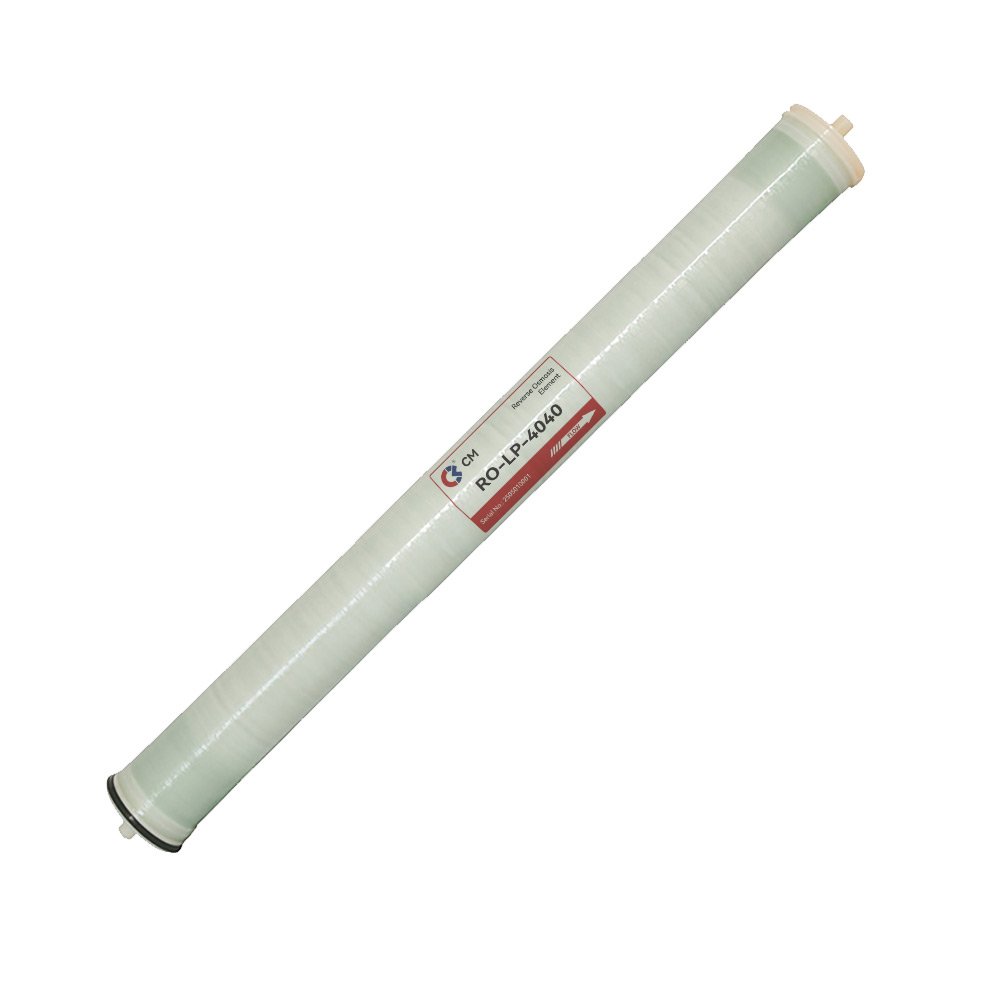
4040 Low Pressure RO Membrane
- 4" × 40" standard element
- Operating pressure: 150 Psi
- Salt rejection: ≥ 99%
- Designed for small & medium RO systems
- Ideal for food processing, pharmaceutical, and light industrial use
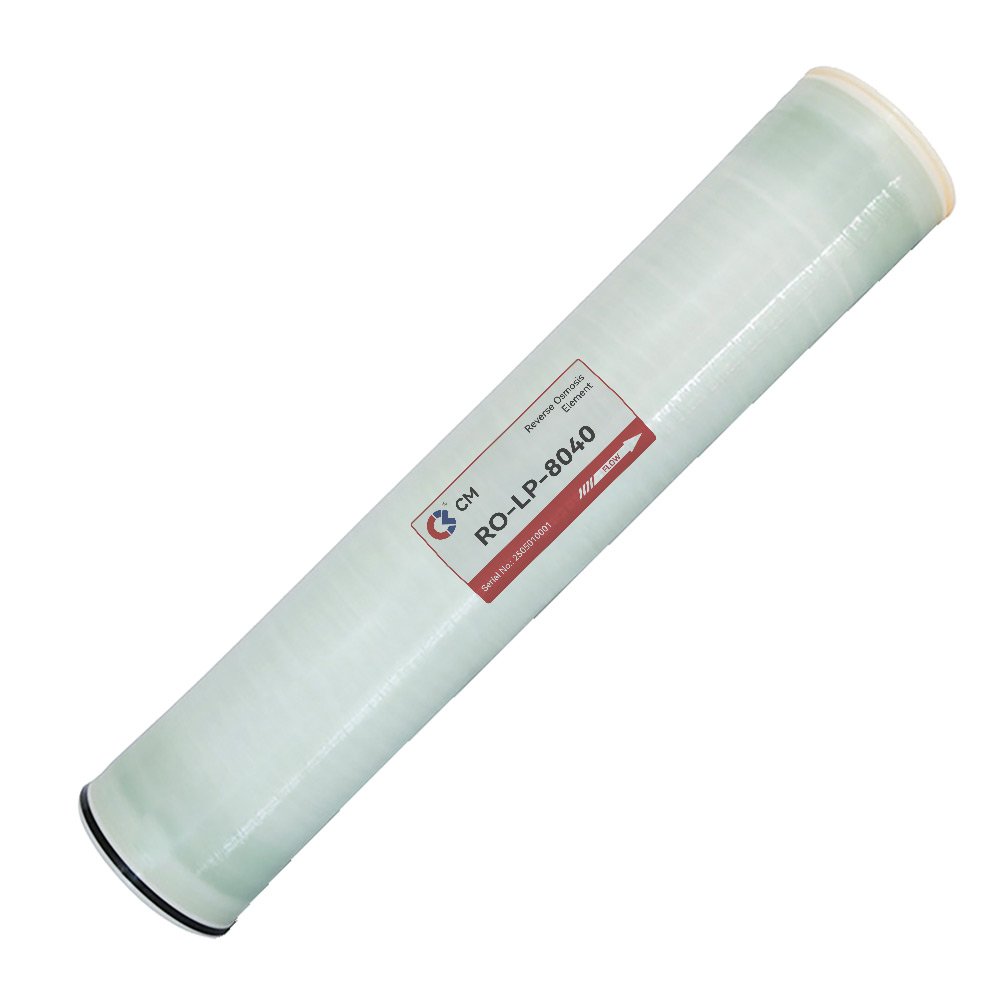
8040 Low Pressure RO Membrane
- 8" × 40" industrial standard
- Operating pressure: 150 Psi
- High active membrane area
- Suitable for municipal and industrial RO skids
- Optimized for continuous operation
Low Pressure RO Membrane Specifications
Technical performance data for our LP series reverse osmosis membranes
| Model | Effective Membrane Area ft² (m²) |
Average Yield GPD (m³/d) |
Salt Rejection (%) |
Recovery Rate (%) |
|---|---|---|---|---|
| LP-2521 | 13 (1.2) | 350 (1.3) | 99.0 | 8 |
| LP-2540 | 28 (2.6) | 750 (2.8) | 99.2 | 15 |
| LP-4021 | 36 (3.3) | 950 (3.6) | 99.2 | 15 |
| LP-4040 | 78 (7.2) | 2600 (9.8) | 99.2 | 15 |
| LP-8040 | 400 (37) | 11000 (41.6) | 99.5 | 15 |
| LP-8440 | 440 (41) | 12000 (45) | 99.5 | 15 |
Technical Operating Parameters
Standard Test Conditions
- 2,000 ppm NaCl solution
- 25°C
- pH 7.5
- 15% recovery
Typical Performance
Proper pretreatment ensures stable long-term performance.
Why Choose Low Pressure RO Membranes?
Lower Operating Pressure = Lower Energy Consumption
Compared with conventional brackish water membranes:
- Reduced pump power demand
- Lower electricity cost per m³
- Decreased system mechanical wear
Over long-term operation, energy savings significantly reduce total cost of ownership (TCO).
Stable Salt Rejection Performance
Despite lower operating pressure, our membranes maintain:
- ≥ 99% salt rejection
- Stable permeate conductivity
- Controlled permeate flow
Balanced flux design prevents excessive fouling risk.
Improved System Stability
Lower pressure operation results in:
- Reduced membrane compaction
- Lower pressure drop growth
- Longer membrane lifespan
Ideal for systems operating 24/7 in municipal and industrial environments.
Application Scenarios
Low Pressure RO Membranes are suitable for:
Municipal tap water purification
Surface water desalination
Industrial process water
Cooling tower makeup water
Boiler feed water systems
Pre-EDI applications
If feed water TDS is below 5,000 ppm and energy optimization is a priority, low pressure membranes are typically the most cost-effective option.
Engineering Selection Guide
Optimize your system design with our low-pressure RO membrane solutions
Ideal Applications
Low Pressure RO Membranes are recommended when:
-
Energy reduction is a key design objective
-
Feed water salinity is moderate
-
System operates continuously
-
Pump capacity is limited
Required Information
To recommend the correct model, please provide:
- 1 Feed water analysis report Complete chemical composition data
- 2 Required permeate capacity Target flow rate (m³/h)
- 3 Target recovery rate Desired system efficiency (%)
- 4 Application type Industrial sector and use case
Fast Expert Response
Our engineering team will evaluate scaling risk, energy optimization potential, and membrane configuration within 24 hours.
Replacement & OEM Capability
Flexible manufacturing solutions designed for engineering firms, integrators, and distributors
Our Capabilities
Compatible with standard 4040 & 8040 pressure vessels
Suitable for direct replacement in most industrial systems
Available for OEM private labeling
Supported by stable bulk production capacity
We Support
Cost Optimization for Industrial Projects
For engineering companies and integrators
Volume discounts available
Reliable delivery schedules
Engineering documentation
White-label solutions
Low Pressure membranes help improve bidding competitiveness by reducing projected operating cost.
Frequently Asked Questions
Expert answers to common technical questions about our low pressure RO membrane systems
What is the difference between low pressure and standard brackish water RO membranes?
What TDS range is suitable for low pressure RO membranes?
Will lower pressure reduce salt rejection?
Can low pressure membranes reduce electricity cost significantly?
Are these membranes compatible with existing 4040 and 8040 systems?
What pretreatment is required?
What is the expected service life?
Do you provide OEM or private label services?
Still have questions about our membrane solutions?
Contact Technical SupportStart Optimizing Your RO System Energy Cost
Send your feed water report and system requirements today. Our engineering team will help you select the most energy-efficient low pressure RO membrane solution for stable long-term operation.
Our engineers will provide:
Recommended membrane model
Estimated operating pressure
Energy optimization suggestion
Bulk project quotation