
In my 12 years of designing water treatment systems—specifically focusing on Reverse Osmosis (RO) and complex wastewater challenges—the landscape of membrane selection has shifted dramatically.
A decade ago, when I was designing my first few seawater desalination plants, the specs almost exclusively called for the "Big Three" international brands (Dow/DuPont, Hydranautics, Toray). Specifying a Chinese membrane back then felt like a gamble I wasn’t willing to take with my client's CAPEX.
But things have changed.
Over the last few years, I’ve watched domestic Chinese manufacturers move from simply copying geometry to innovating their own polymer chemistry. The performance gap is closing, and the cost advantage is impossible to ignore. If you are sourcing for 2025-2026, you need to know who the real players are.
Based on market share, technical capability, and what I’m seeing in the field, here is my breakdown of the top 10 Chinese seawater desalination membrane manufacturers.
1. Vontron Technology Co., Ltd.
If you've worked in the Chinese market, you know Vontron. Backed by the China National Chemical Corporation, they are arguably the domestic leader. From an engineering standpoint, their R&D (supported by the Chinese Academy of Sciences) is legit. I’ve seen their SW (Seawater) series perform surprisingly well in large-scale industrial projects where durability is key. They are no longer just a "cheap alternative"; they are a standard.
2. Beijing OriginWater Technology Co., Ltd. (Bi Shui Yuan)
While I often associate OriginWater with their massive MBR (Membrane Bioreactor) market share in wastewater, their push into the RO space has been aggressive. They are a powerhouse in environmental tech. If you are looking for a vendor that can handle a "whole plant" solution—from pretreatment to RO—they have the portfolio to back it up.
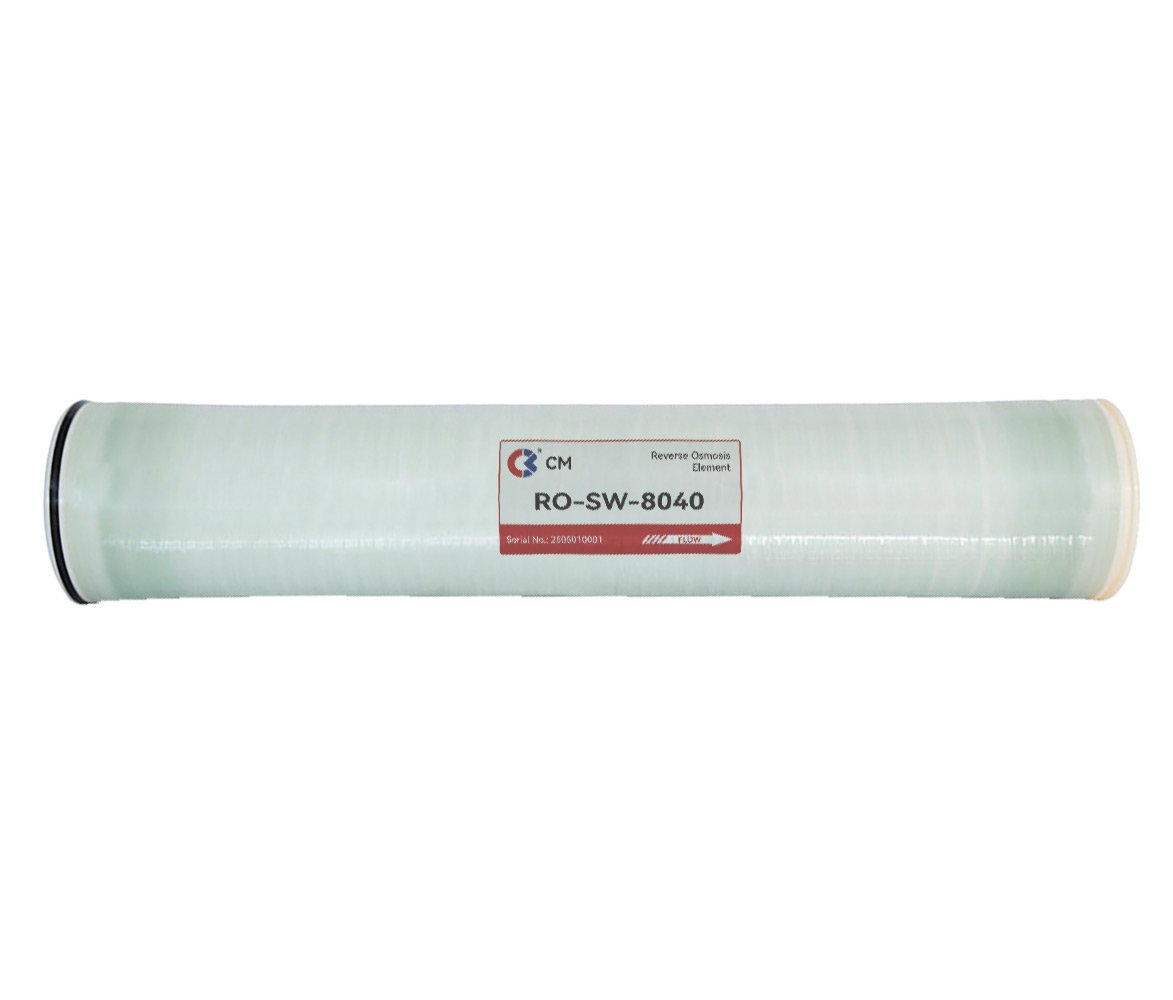
3. Shanghai CM Environmental Technology Co., Ltd.
I’ve been keeping an eye on Shanghai CM recently. They are focusing heavily on their SW series with optimized high-flux capabilities. As a designer, high flux is music to my ears because it directly impacts the energy consumption per cubic meter of water produced. If you are trying to lower OPEX on a desalination plant, these guys are worth a look.
High desalination rate, averaging over 99.7%
Stable water production
Strong anti-fouling capability
Service life of 3-5 years
4. Hangzhou Water Treatment Technology Development Center
These guys are the academics of the group. As a state-affiliated center, their approach is deeply rooted in research and national key projects. They aren't just selling products; they are developing the systems. If your project has unique technical hurdles, their expertise in system integration is a strong asset.
5. Sinomembratech (Zhonghuan Membrane)
A major player in separation membranes. What stands out to me here is their sheer production capacity and export volume. They produce solid, workhorse elements for both desalination and brackish water. Reliability is the keyword here.
6. Toray Bluestar Membrane Co., Ltd.
This is an interesting one. It’s a Joint Venture between Japan’s Toray and China’s Bluestar. For me, this represents a "sweet spot" in procurement: you get Toray’s legendary automated manufacturing consistency and high-rejection technology, but with local supply chain benefits. They are heavily involved in massive projects like Caofeidian, which speaks volumes about their reliability.
7. Tianjin MOTIMO Membrane Technology
MOTIMO is another brand crossing over from the municipal and UF (Ultrafiltration) sectors. Their hollow fiber tech is well known, but their RO elements are gaining traction in industrial desalination applications.
8. Whiwater (Era Water)
Related to the Times Vontron lineage, Whiwater is focusing on advanced RO membranes. They have strong domestic production capabilities and are integrating well into local projects.
9. HID Membrane Co., Ltd.
If budget is the primary constraint, HID is a name that comes up often. They specialize in cost-effective solutions. While I might not put them in a critical high-pressure, high-fouling application without a pilot test, for standard seawater or brackish water treatment, their value proposition is hard to beat.
10. UltraClean Membrane
As the name suggests, they are aiming for the high end. They produce extra-high rejection types for seawater desalination. In my designs, "rejection rate" is king when dealing with strict permeate quality standards (like boiler feed), so having a manufacturer focused specifically on this metric is valuable.
While international giants still hold the crown for the most critical, high-risk mega-projects, the companies listed above are dominating the domestic market and aggressively expanding exports.
For us engineers, this means we have more tools in our toolbox. It’s no longer a question of "Is it good enough?" but rather "which specific membrane fits the chemistry of my feed water?"
Need a second opinion on your system design?
Selecting the right membrane is about more than just the brand name; it’s about balancing flux, rejection, and energy costs against your specific water analysis. If you’re currently designing a system or looking to retrofit an existing RO plant, feel free to reach out. I’m always happy to share what I’ve learned over the last 12 years to help you get the best water quality possible.
Let's discuss your project in the comments or send me a message.