
Airport Wastewater Reuse System Case Study
400 m³/h Nanofiltration + Reverse Osmosis Plant – Russia
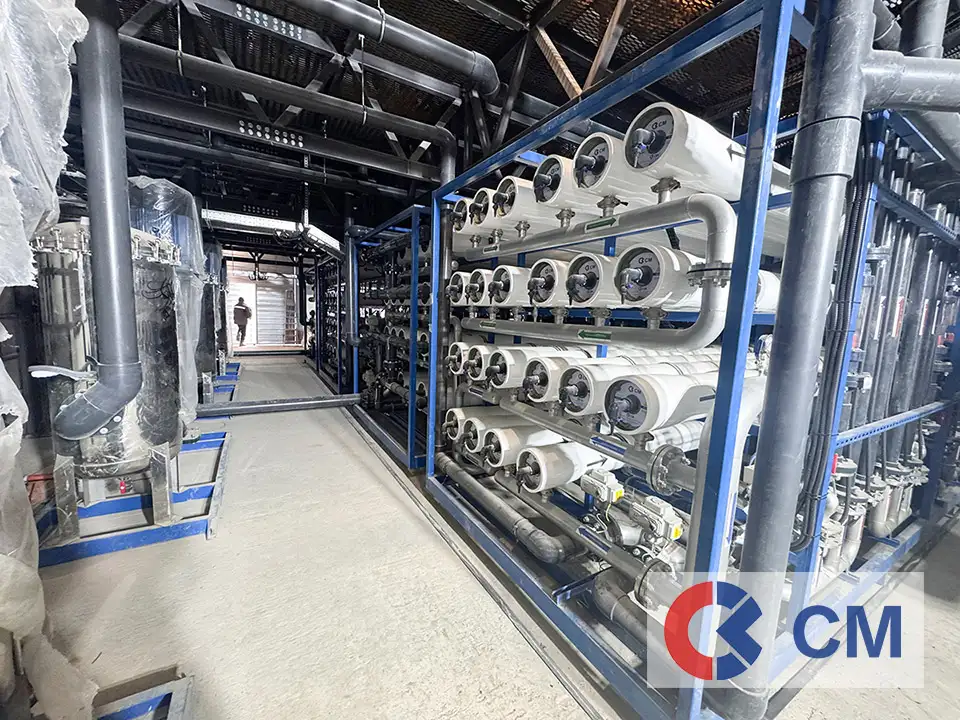
With the increasing demand for sustainable infrastructure, airport wastewater reuse systems are becoming essential for reducing freshwater consumption and ensuring long-term operational stability.
This case study presents a 400 m³/h wastewater reclamation system designed for Pulkovo International Airport (Russia), utilizing an advanced nanofiltration and reverse osmosis (NF + RO) system to deliver high-quality reclaimed water.
Project Overview
- Location: Saint Petersburg, Russia
- Application: Airport wastewater reuse
- System Type: Nanofiltration + Reverse Osmosis
- Total Capacity: 400 m³/h
- Number of Systems: 8 Units
Each unit integrates a 60 m³/h nanofiltration system and a 50 m³/h reverse osmosis system, forming a robust and efficient industrial water reuse system.
Why Airports Need Wastewater Reuse Systems
Airports consume large volumes of water daily for:
- HVAC and cooling systems
- Aircraft and facility cleaning
- Landscape irrigation
- Sanitary flushing systems
A well-designed wastewater reclamation system helps:
- Reduce dependence on municipal water
- Lower operational costs
- Meet environmental compliance standards
- Improve sustainability performance
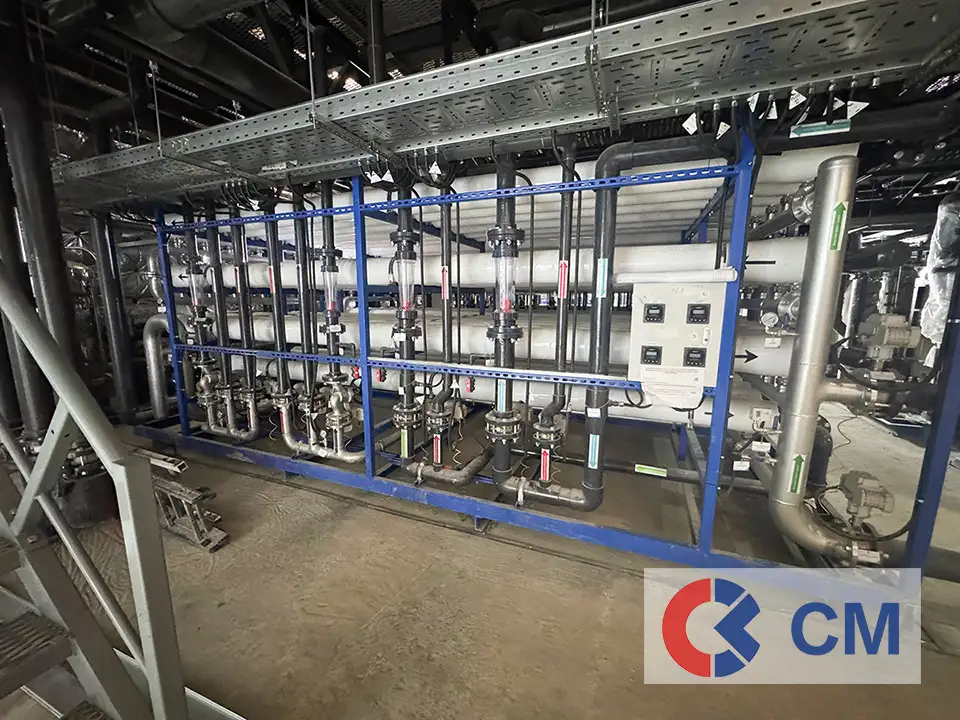
NF + RO System Design
This project adopts a two-stage membrane treatment process, which is widely used in industrial wastewater treatment systems.
1. Pretreatment Section
Effective pretreatment is critical for any NF RO system design.
Processes include:
- Coagulation & flocculation
- Multimedia filtration
- Cartridge filtration
Function:
- Remove suspended solids
- Reduce SDI
- Protect membrane lifespan
2. Nanofiltration System (60 m³/h)
The nanofiltration system acts as a selective barrier before RO.
Key Functions:
- Removal of organic matter
- Reduction of hardness (Ca²⁺, Mg²⁺)
- Lowering turbidity and color
Configuration:
- 60 × 8040 NF membrane elements per unit
- Optimized for high flux and fouling resistance
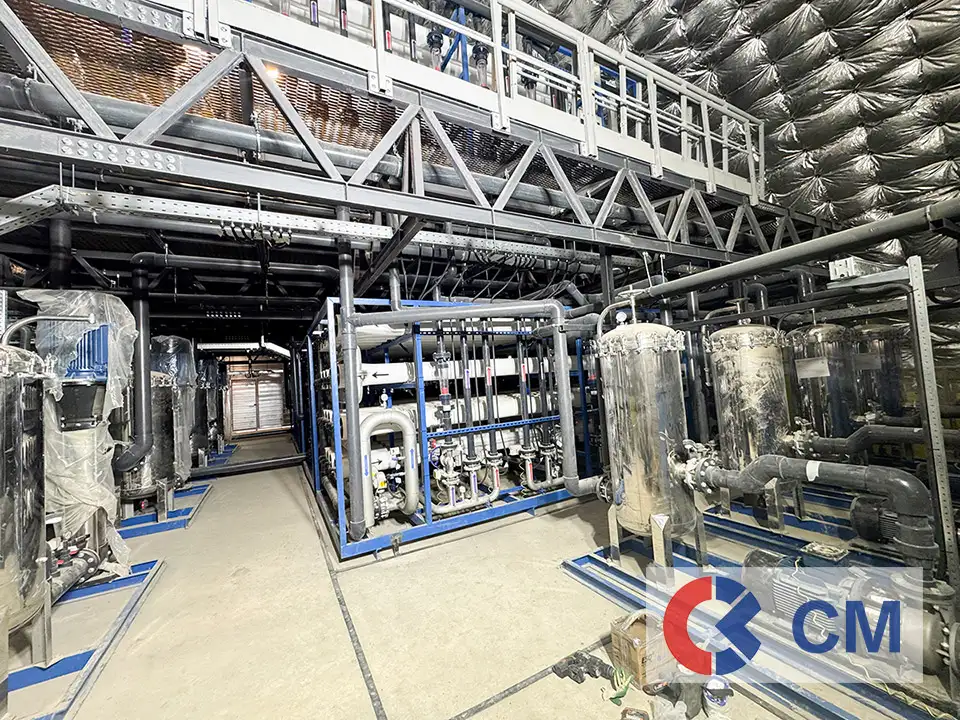
3. Reverse Osmosis System (50 m³/h)
The reverse osmosis system ensures deep purification and stable output quality.
Removal Performance:
- Dissolved salts (TDS)
- Heavy metals
- Micro-contaminants
Configuration:
- 50 × 8040 RO membrane elements per unit
- High salt rejection (>99%)
Modular System Integration
The project includes 8 parallel NF + RO systems, forming a large-scale airport water recycling solution.
Advantages of modular design:
- Flexible operation
- Easy maintenance
- High redundancy
- Scalable capacity
Project Results
✔ Stable Water Supply
The wastewater reuse system provides consistent reclaimed water for airport operations.
✔ Reduced Operating Costs
- Lower freshwater usage
- Reduced wastewater discharge fees
✔ Environmental Benefits
- Lower water footprint
- Compliance with environmental regulations
✔ Long-Term System Stability
The optimized nanofiltration and reverse osmosis system reduces fouling and extends membrane lifespan.
Why Choose NF + RO for Wastewater Reuse?
Compared with single-stage systems, the NF + RO combination offers:
- Better fouling control
- Higher recovery rate
- Improved removal of organics and hardness
- Lower long-term operating costs
This makes it ideal for:
- Airports
- Municipal projects
- Industrial water reuse systems
Conclusion
This airport wastewater reuse system in Russia demonstrates how advanced membrane-based water treatment solutions can achieve:
- Large-scale capacity (400 m³/h)
- Reliable performance
- Sustainable water management
As global demand for wastewater reclamation systems continues to grow, NF + RO technology is becoming the preferred solution for complex applications.
FAQ
1. What is an airport wastewater reuse system?
An airport wastewater reuse system is a treatment solution that recycles wastewater generated from airport operations into reusable water.
It typically includes processes such as pretreatment, nanofiltration (NF), reverse osmosis (RO), or MBR, producing water suitable for:
- Cooling systems
- Toilet flushing
- Irrigation
- Cleaning applications
2. Why do airports need wastewater reclamation systems?
Airports consume large volumes of water daily, making water reuse systems essential for:
- Reducing freshwater consumption
- Lowering operating costs
- Meeting environmental regulations
- Ensuring sustainable infrastructure development
3. What is the advantage of using NF + RO in wastewater reuse?
A nanofiltration + reverse osmosis system provides multi-stage purification:
- NF removes organics, hardness, and turbidity
- RO removes dissolved salts and micro-pollutants
Key advantages:
- Lower fouling risk
- Higher system stability
- Better water quality
- Reduced long-term operating cost
4. What is the typical capacity of an airport water reuse system?
Capacity depends on airport size and water demand.
Typical ranges:
- Small airports: 50–100 m³/h
- Medium airports: 100–300 m³/h
- Large international airports: 300–1000+ m³/h
This project operates at 400 m³/h, suitable for large-scale applications.
5. What type of membranes are used in this system?
This system uses:
- 8040 nanofiltration membranes (for pre-desalination and organic removal)
- 8040 reverse osmosis membranes (for deep purification)
These are industry-standard configurations for industrial wastewater treatment systems.
6. How do you prevent membrane fouling in NF and RO systems?
Fouling control is critical in any NF RO system design.
Common strategies include:
- Effective pretreatment (coagulation, filtration)
- Antiscalant dosing
- Regular CIP (clean-in-place)
- Optimized system recovery rate
7. What is the water quality after NF + RO treatment?
After treatment, the reclaimed water typically achieves:
- Low TDS
- Low turbidity
- Removal of bacteria and contaminants
It is suitable for non-potable reuse applications, and can be further treated if potable reuse is required.
8. What are the operating costs of a wastewater reuse system?
Operating costs depend on:
- Feed water quality
- System design
- Energy consumption
- Membrane replacement cycle
However, compared to using municipal water, water reuse systems significantly reduce long-term costs, especially in large facilities like airports.
9. Can the system be customized for different projects?
Yes. Each wastewater reclamation system is typically customized based on:
- Water quality
- Capacity requirements
- Local regulations
- Available space
Modular designs (like this 8-unit system) allow flexible scaling.
10. How long do NF and RO membranes last?
Typical lifespan:
- NF membranes: 3–5 years
- RO membranes: 3–5 years
This depends on:
- Pretreatment efficiency
- Operating conditions
- Cleaning frequency
Proper system design can significantly extend membrane life.
Need a Similar Wastewater Reuse System?
We provide:
- Custom NF + RO system design
- Membrane supply (NF / RO / MBR)
- Turnkey wastewater treatment solutions
👉 Contact us today for technical consultation.