
Industrial RO System Guide: Design, Components, Applications & Engineering Solutions
Industrial reverse osmosis (RO) systems are widely used for industrial water purification, seawater desalination, wastewater reuse, and high-purity process water production.
This comprehensive guide explains how industrial RO systems work, how to design an RO plant, how to optimize recovery rates and membrane performance, and how to select the right reverse osmosis solution for industrial applications.
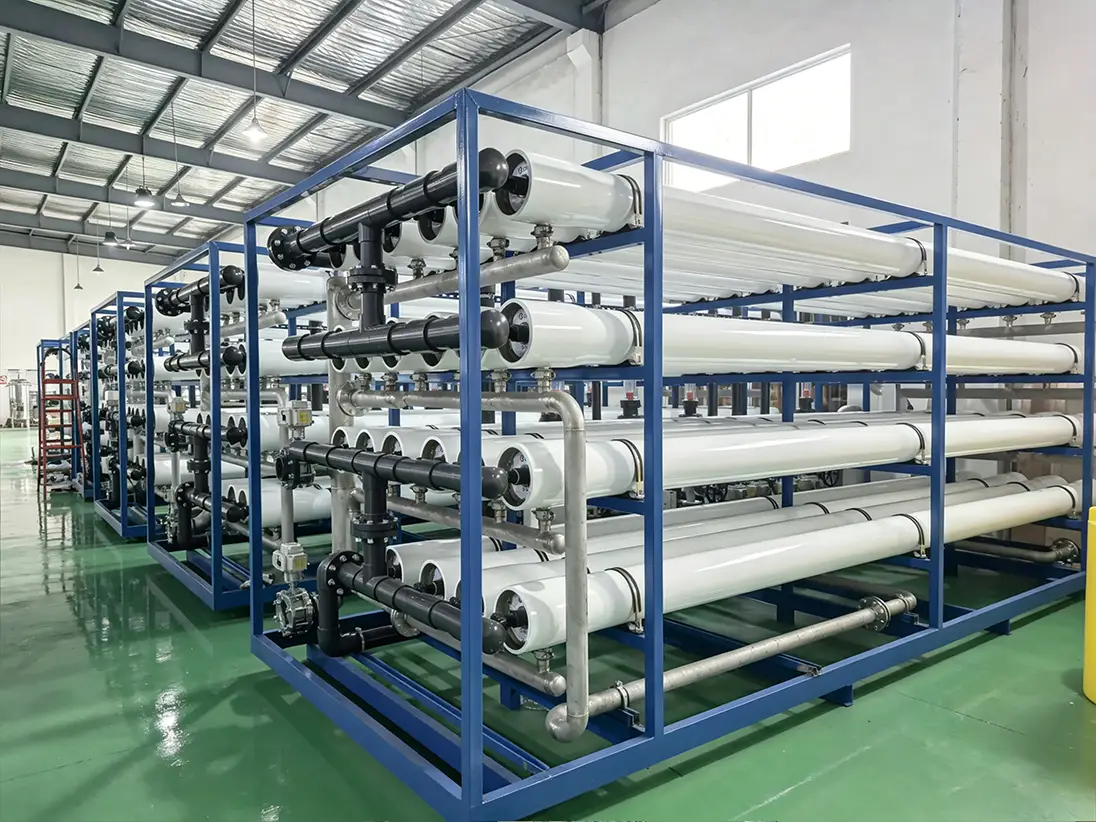
Table of Contents
What Is an Industrial RO System?
An industrial reverse osmosis system is a pressure-driven membrane filtration system used to remove dissolved salts, suspended solids, bacteria, organic contaminants, and other impurities from water.
Compared with conventional filtration technologies, reverse osmosis systems provide significantly higher water purification performance and can achieve extremely low conductivity and TDS levels.
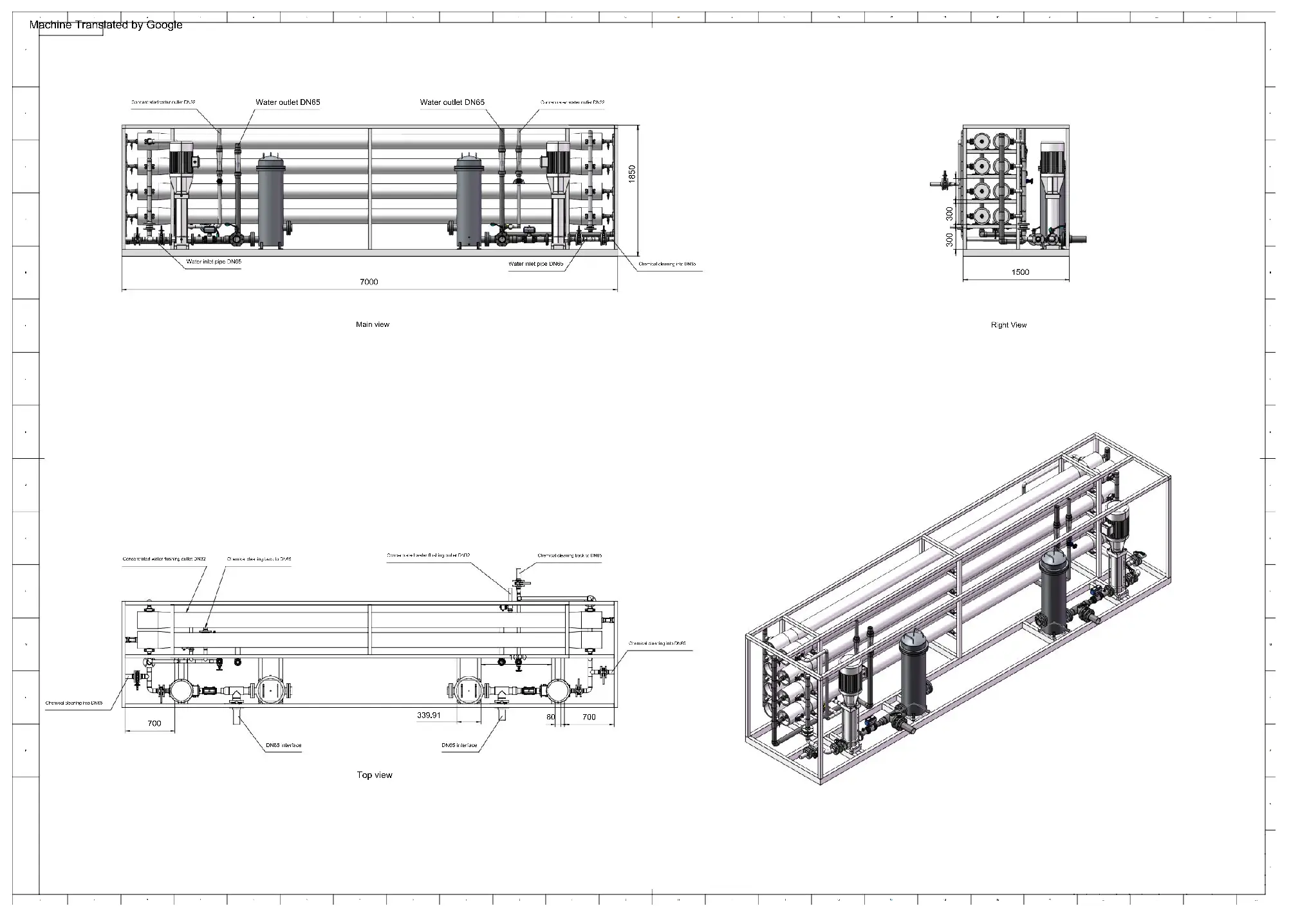
Industrial RO systems are typically designed for continuous operation under demanding industrial conditions and can be customized according to feed water quality, water production capacity, and required permeate quality.
Industrial RO Systems Are Widely Used In:
How Industrial RO Systems Work
Industrial reverse osmosis systems use semi-permeable membranes and high operating pressure to separate clean water from dissolved contaminants. The process works by applying pressure to feed water, forcing water molecules through the RO membrane while rejecting dissolved salts, organic compounds, bacteria, and other contaminants.
Typical Industrial RO Process Flow
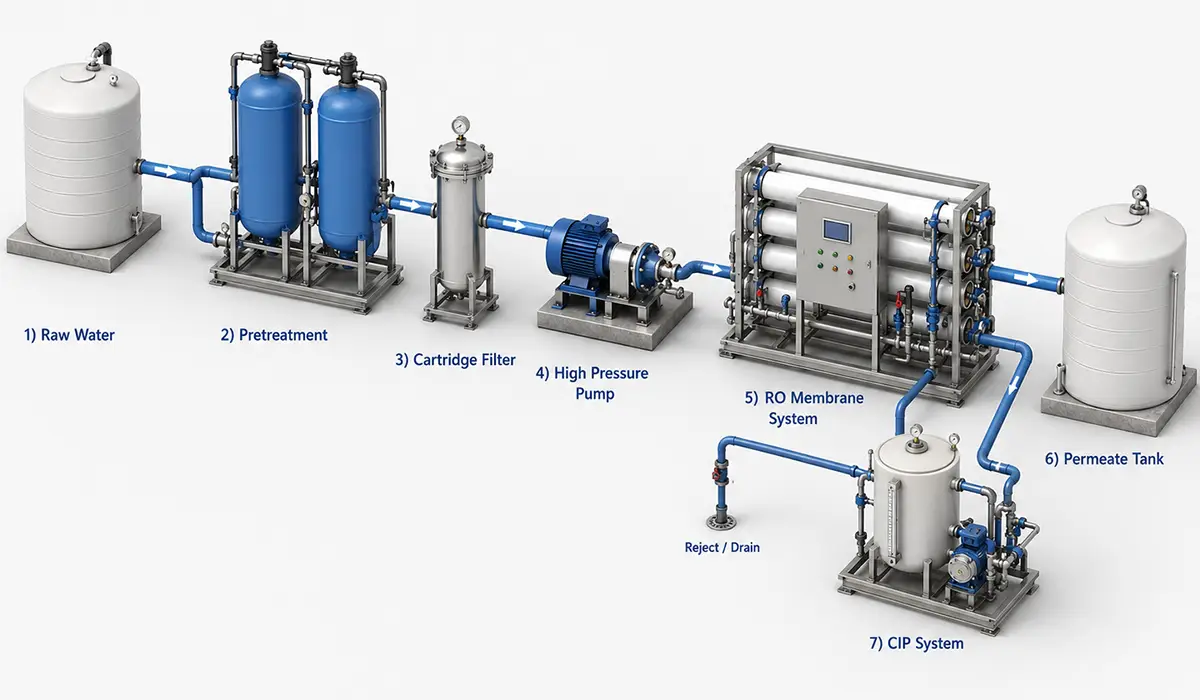
Raw Water Supply
The system receives raw water from groundwater, municipal water, surface water, seawater, or wastewater reuse sources.
Pretreatment System
Pretreatment protects RO membranes from fouling, scaling, and mechanical damage. Includes multimedia filtration, activated carbon, softening, and chemical dosing.
High Pressure Pump
The high-pressure pump provides the required operating pressure for membrane separation, typically 10-80 bar depending on application.
RO Membrane Separation
The reverse osmosis membrane removes dissolved salts and contaminants while allowing purified water to pass through as permeate.
Permeate Production
Purified water is collected as permeate water for industrial use, achieving very low TDS and conductivity levels.
CIP Cleaning System
The Clean-In-Place (CIP) system is used for membrane cleaning and performance recovery, maintaining long-term system efficiency.
Industrial RO System Design Considerations
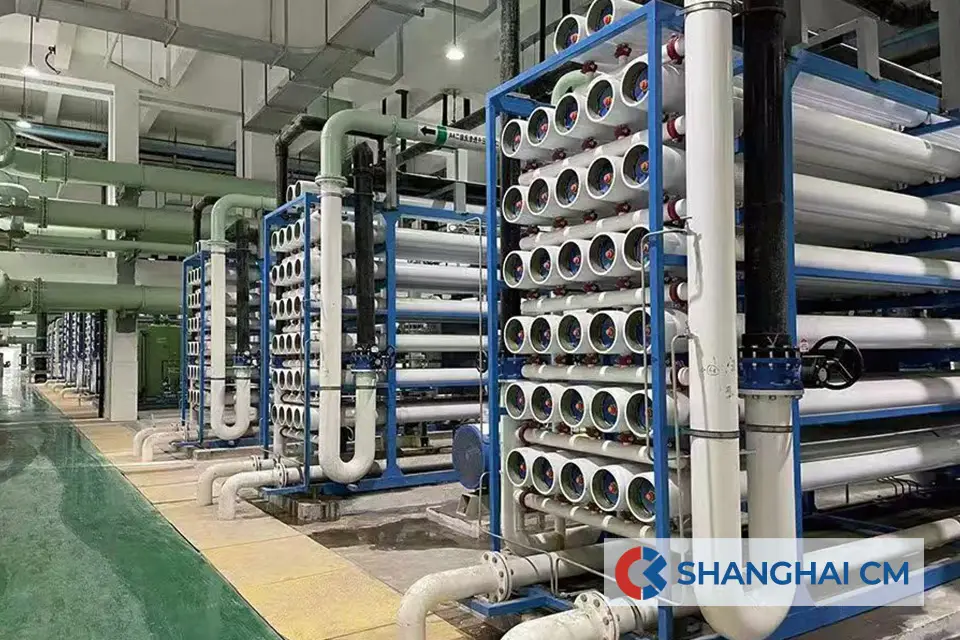
Proper industrial RO system design requires balancing water quality requirements, membrane performance, recovery rate, energy consumption, and operational reliability. A well-designed reverse osmosis system can significantly reduce operating costs while improving membrane lifespan and system stability.
Feed Water Analysis
Feed water quality determines the entire RO system design strategy. Key feed water parameters include:
Feed Water Source Considerations
Recovery Rate Design
Recovery rate is one of the most critical parameters in industrial RO engineering. Higher recovery rates reduce wastewater discharge and operating costs but increase scaling and membrane fouling risks.
Typical Recovery Rates by Application
| Application | Typical Recovery |
|---|---|
| Brackish Water RO | 65-85% |
| Seawater RO | 35-50% |
| Wastewater Reuse RO | 50-75% |
Scaling Control
Scaling is one of the most common problems in industrial reverse osmosis systems. Common scale types include calcium carbonate, calcium sulfate, silica scale, and barium sulfate.
Scaling Control Methods
- Antiscalant dosing
- pH adjustment
- Softening systems
- Recovery optimization
Energy Optimization Methods
- Low-energy RO membranes
- Variable frequency drive (VFD) pumps
- Energy recovery devices (ERD)
- Optimized operating pressure
Industrial RO System Components
Industrial reverse osmosis systems consist of multiple integrated components working together to ensure stable water purification performance.
RO Membrane
The core component of the system. Removes dissolved salts, bacteria, and organic contaminants with up to 99.8% rejection rate.
Pressure Vessel
Houses the RO membrane elements and withstands high operating pressure. Available in FRP and stainless steel construction.
High Pressure Pump
Provides the energy required for membrane separation. VFD-equipped pumps enable energy-efficient variable flow operation.
Cartridge Filter
Protects RO membranes from suspended solids and particles. Typically 5 micron rating as final protection before membranes.
Chemical Dosing System
Controls scaling, biological fouling, oxidation, and pH adjustment for optimal membrane protection and performance.
PLC Control System
Modern industrial RO systems use PLC automation for pressure monitoring, flow control, conductivity monitoring, automatic flushing, and alarm protection.
Types of Industrial RO Systems
Industrial RO systems can be classified according to feed water type, application, and system configuration.
Brackish Water RO System
BWRO systems treat groundwater and low-to-medium salinity water sources at lower operating pressures, making them energy-efficient for most industrial applications.
Typical Applications:
- Industrial process water
- Municipal water treatment
- Boiler feed water
Seawater RO System
SWRO systems are designed for seawater desalination and operate at significantly higher pressure (55-80 bar), requiring specialized high-rejection membranes.
Typical Applications:
- Drinking water production
- Island desalination
- Offshore water supply
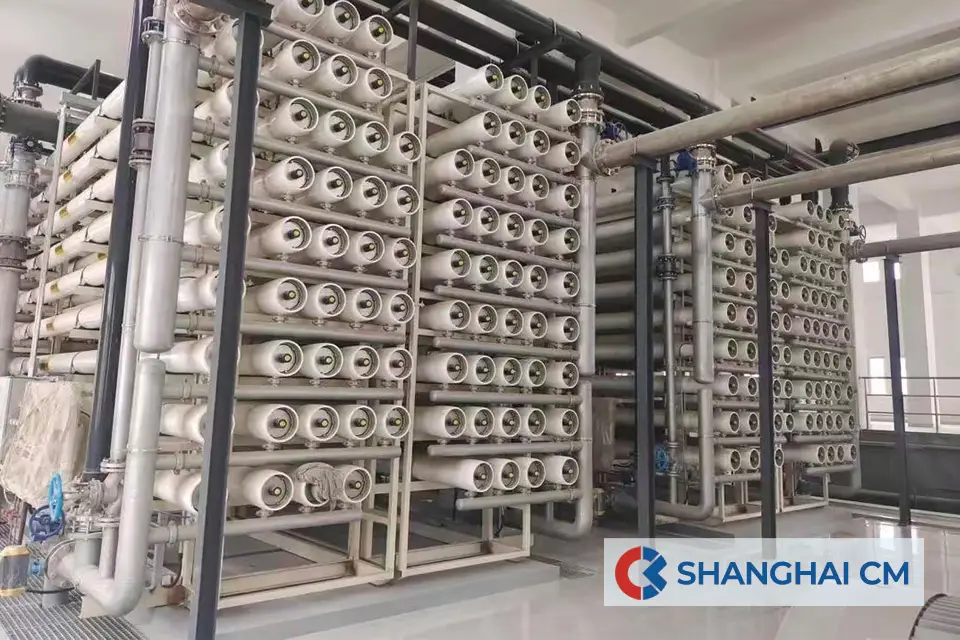
Two-Pass RO System
Two-pass RO systems use two stages of membrane separation to achieve ultra-high water purity, suitable for the most demanding industrial applications.
Typical Applications:
- Pharmaceutical water
- Electronics manufacturing
- High-pressure boiler feed water
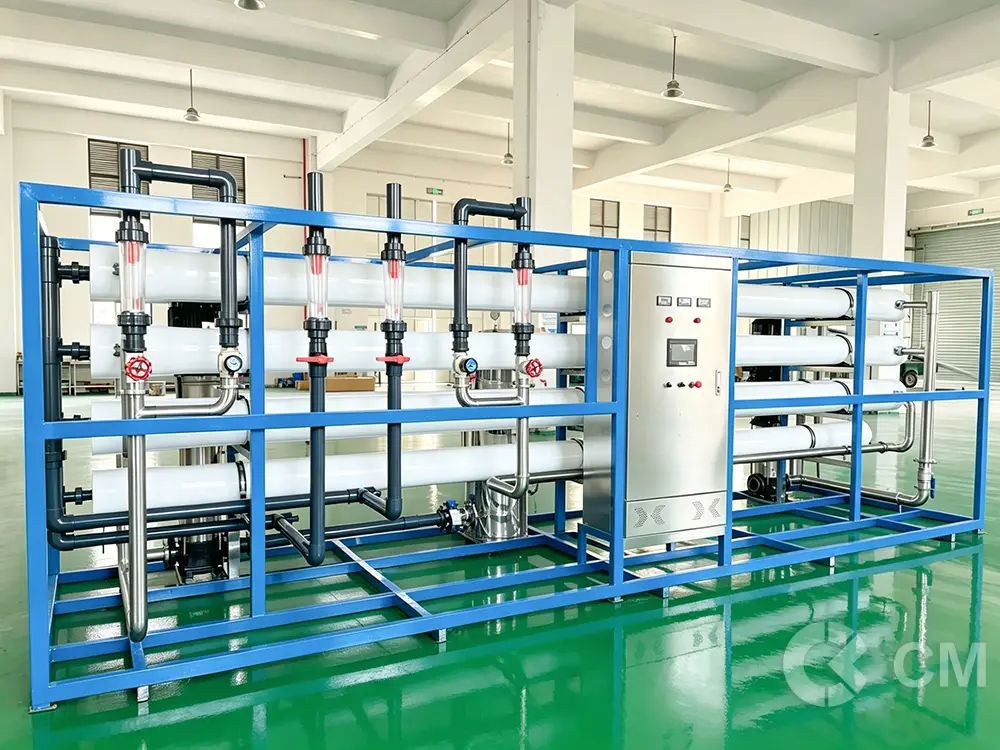
Containerized RO System
Containerized RO systems integrate water treatment equipment into standard containers for rapid deployment in remote or challenging locations.
Typical Applications:
- Mining camps
- Remote industrial sites
- Emergency water supply
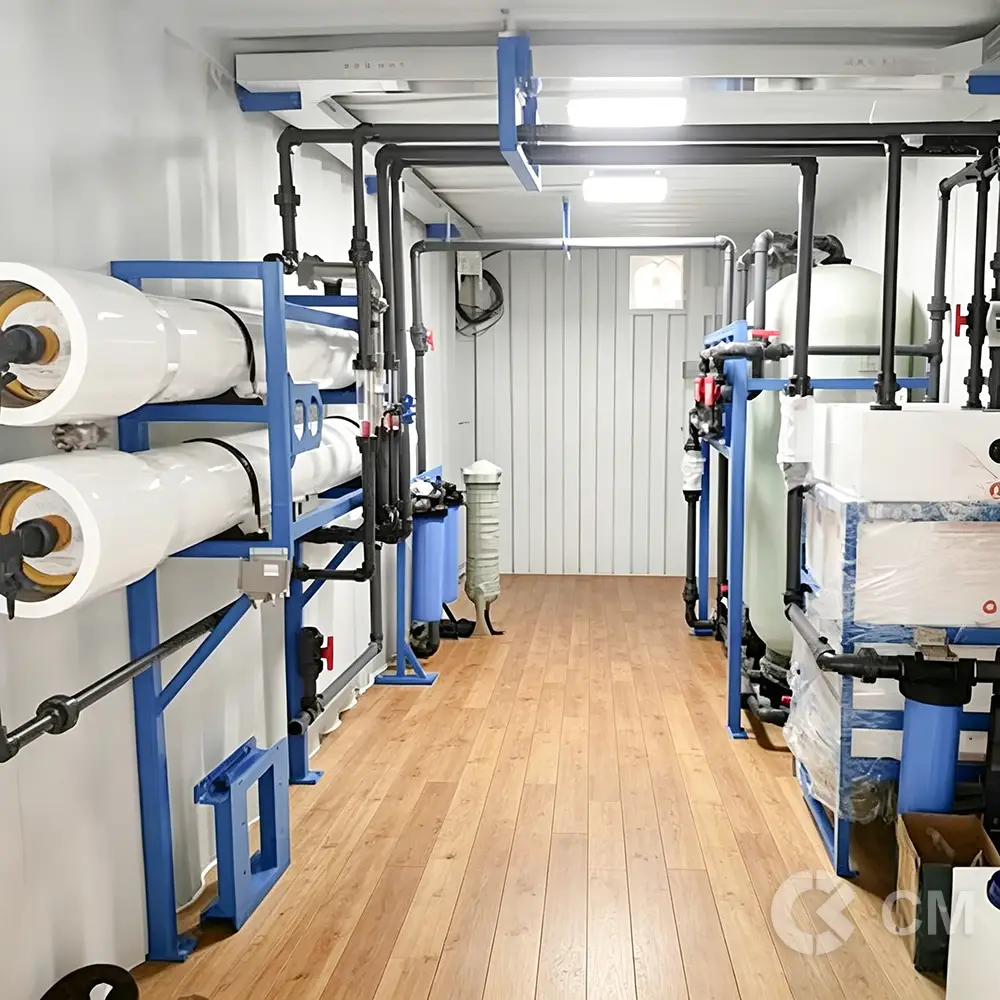
Industrial RO System Applications
Industrial RO systems are widely used across multiple industries, providing reliable water purification for demanding process requirements.
Boiler Feed Water
RO systems remove dissolved salts and silica before EDI or mixed bed polishing systems, protecting boilers from scaling and corrosion.
Food & Beverage
Used for beverage production, dairy processing, ingredient water, and CIP water supply to ensure product quality and consistency.
Pharmaceutical
Double-pass RO systems produce purified water meeting pharmacopoeia standards for pharmaceutical manufacturing processes.
Electronics & Semiconductor
High-purity RO systems are critical for semiconductor rinsing and ultrapure water production in microelectronics fabrication.
Textile Industry
Widely used for dyeing wastewater reuse and process water purification, reducing freshwater consumption and discharge costs.
Wastewater Reuse & ZLD
Industrial RO systems are widely used for industrial wastewater recycling and zero liquid discharge (ZLD) projects, minimizing environmental impact.
BWRO vs SWRO Systems
Understanding the key differences between brackish water and seawater reverse osmosis systems is critical for correct system selection and design.
BWRO vs SWRO Comparison
| Parameter | BWRO | SWRO |
|---|---|---|
| Feed Water TDS | 1,000-10,000 ppm | 35,000-45,000 ppm |
| Operating Pressure | 10-25 bar | 55-80 bar |
| Recovery Rate | 65-85% | 35-50% |
| Energy Consumption | Lower | Higher |
| Membrane Type | BWRO Membrane | SWRO Membrane |
| Main Application | Groundwater & Industrial Water | Seawater Desalination |
Typical Industrial RO Design Parameters
These reference parameters provide a starting point for industrial RO system design. Actual values must be determined through detailed feed water analysis and engineering calculations.
Industrial RO System Design Parameters Reference
Engineering Reference| Parameter | Typical Range |
|---|---|
| Feed Water TDS | 500-45,000 ppm |
| RO Recovery Rate | 50-85% |
| Operating Pressure | 10-70 bar |
| Permeate Conductivity | <10-50 μS/cm |
| Membrane Flux | 12-30 LMH |
| Feed Water Temperature | 5-45°C |
| SDI Requirement | <3 |
| pH Range | 3-10 |
| Membrane Salt Rejection | 99-99.8% |
| CIP Frequency | Every 1-6 months |
How to Select the Right Industrial RO System
Selecting the correct industrial RO system requires evaluating several engineering factors to ensure long-term performance, reliability, and cost-effectiveness.
Feed Water Quality
A detailed feed water analysis is essential for membrane and pretreatment selection. Key parameters include TDS, SDI, hardness, silica, and organic content.
Required Water Quality
Different industries require different permeate quality standards. Pharmaceutical and semiconductor applications demand higher purity than general industrial use.
System Capacity
Industrial RO systems range from small containerized systems to large-scale desalination plants. Capacity must account for peak demand and future expansion.
Recovery Requirements
Higher recovery rates improve water utilization but increase scaling risk. Balance recovery targets against concentrate management capabilities.
Installation Space
Containerized and skid-mounted systems are ideal for limited installation areas. Consider access for maintenance and future expansion requirements.
Automation Requirements
Modern industrial systems may include PLC control, remote monitoring, automatic flushing, and energy management systems for reduced operational overhead.
Custom Industrial RO Engineering Services
End-to-End RO Engineering Solutions
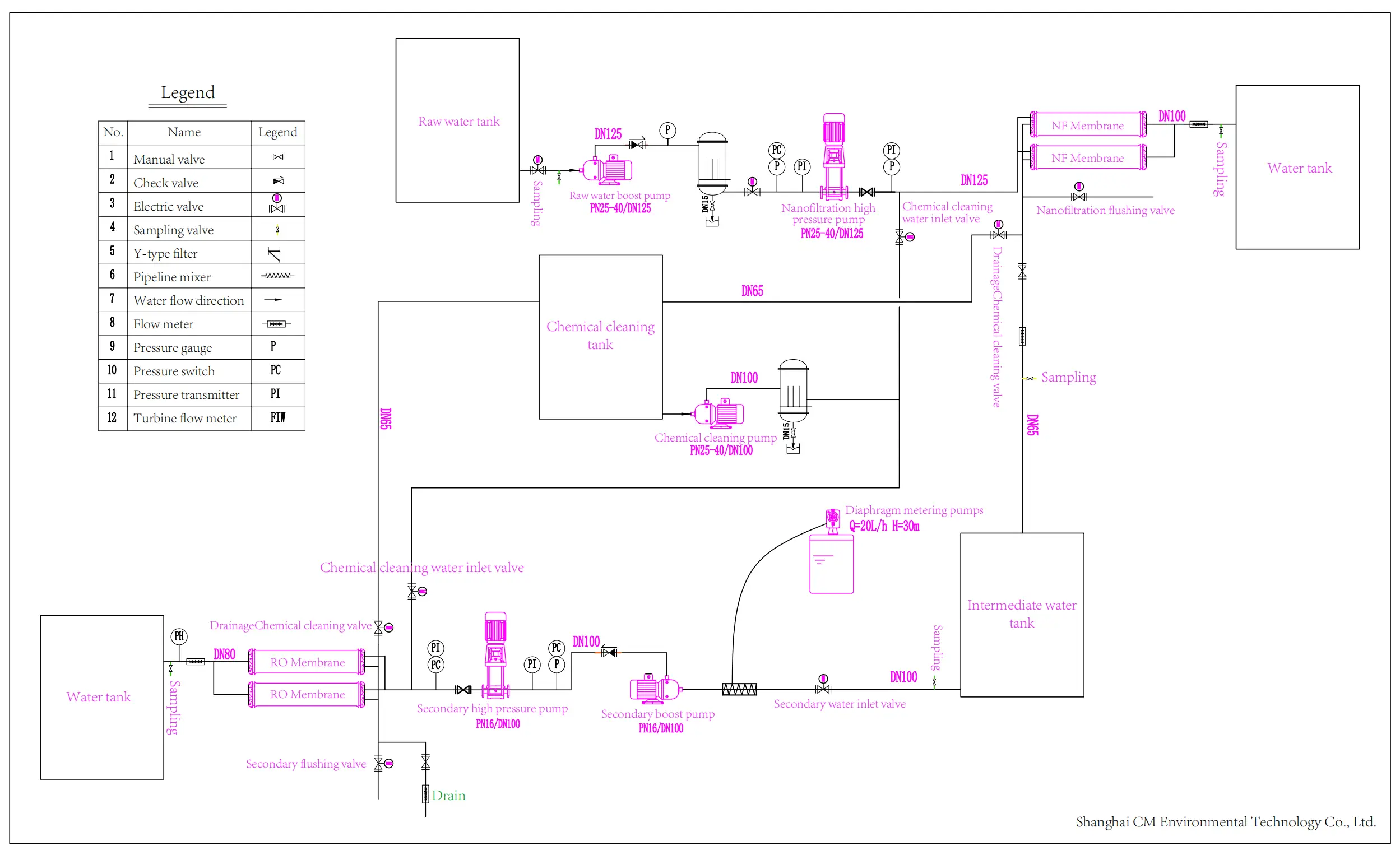
CM provides customized industrial reverse osmosis engineering solutions for industrial water treatment projects worldwide, from small skid-mounted systems to large-scale seawater desalination plants.
Industrial RO System FAQ
Frequently asked questions about industrial reverse osmosis systems, covering design, performance, maintenance, and selection considerations.
What Is an Industrial RO System?
An industrial reverse osmosis system is a membrane-based water purification system used to remove dissolved salts, contaminants, and impurities from industrial water sources. It operates by applying high pressure to force water through semi-permeable membranes, achieving high-purity permeate water for industrial applications.
What Is the Recovery Rate of an RO System?
Recovery rate refers to the percentage of feed water converted into purified permeate water. For example, a system with 75% recovery converts 75% of the feed water into permeate and discharges 25% as concentrate. Typical recovery rates range from 35-50% for seawater RO to 65-85% for brackish water RO systems.
How Long Do Industrial RO Membranes Last?
Industrial RO membranes typically last 3-5 years depending on feed water quality and operating conditions. Proper pretreatment, regular CIP cleaning, and maintaining recommended operating parameters can extend membrane lifespan. Membranes exposed to high fouling, scaling, or chemical damage may have shorter service lives.
What Pretreatment Is Required Before RO?
Typical pretreatment includes multimedia filtration, activated carbon filtration, ultrafiltration, softening, and chemical dosing. The specific pretreatment required depends on feed water quality:
- High turbidity water requires multimedia filtration
- High hardness water requires softening
- High organic content requires activated carbon filtration
- High SDI water requires ultrafiltration pretreatment
What Causes RO Membrane Fouling?
Common causes of RO membrane fouling include:
- Suspended solids: Particles and colloids that block membrane surface
- Biological contamination: Biofilm formation by bacteria and microorganisms
- Scaling: Precipitation of sparingly soluble salts on membrane surface
- Organic fouling: Adsorption of natural organic matter and humic substances
What Is the Difference Between BWRO and SWRO?
BWRO (Brackish Water Reverse Osmosis) systems treat lower salinity water (1,000-10,000 ppm TDS) at lower operating pressures (10-25 bar), achieving 65-85% recovery. SWRO (Seawater Reverse Osmosis) systems are designed for seawater desalination (35,000-45,000 ppm TDS) and operate at much higher pressure (55-80 bar) with lower recovery rates (35-50%) due to the high osmotic pressure of seawater.
How Often Should RO Membranes Be Cleaned?
Most industrial RO systems require CIP cleaning every 1-6 months depending on operating conditions. Cleaning should be triggered when normalized permeate flow decreases by 10-15%, differential pressure increases by 10-15%, or salt rejection decreases by 1-2%. Systems with challenging feed water may require more frequent cleaning.
What Is Two-Pass RO?
Two-pass RO systems use two stages of reverse osmosis membranes to achieve higher water purity. The permeate from the first-pass RO is fed into a second-pass RO system for further purification. This configuration is commonly used in pharmaceutical water production, electronics manufacturing, and high-pressure boiler feed water applications where single-pass RO cannot achieve the required water quality.
How Much Does an Industrial RO System Cost?
Industrial RO system cost depends on multiple factors:
- System capacity (m³/h or m³/day)
- Feed water quality and required pretreatment
- Recovery rate and concentrate management
- Automation and control level
- Installation and commissioning requirements
Contact our engineering team for a detailed project quotation based on your specific requirements.
Can Industrial RO Systems Be Customized?
Yes. Industrial RO systems can be fully customized according to water quality requirements, production capacity, installation space, and project specifications. Customization options include membrane selection, pretreatment configuration, skid layout, automation level, containerized packaging, and OEM manufacturing. Our engineering team provides complete design and manufacturing support for custom industrial RO projects worldwide.
Ready to Design Your Industrial RO System?
Our engineering team provides customized industrial RO system design, membrane selection, and complete project support for water treatment professionals worldwide.